How Digital Transformation is Changing Local Businesses
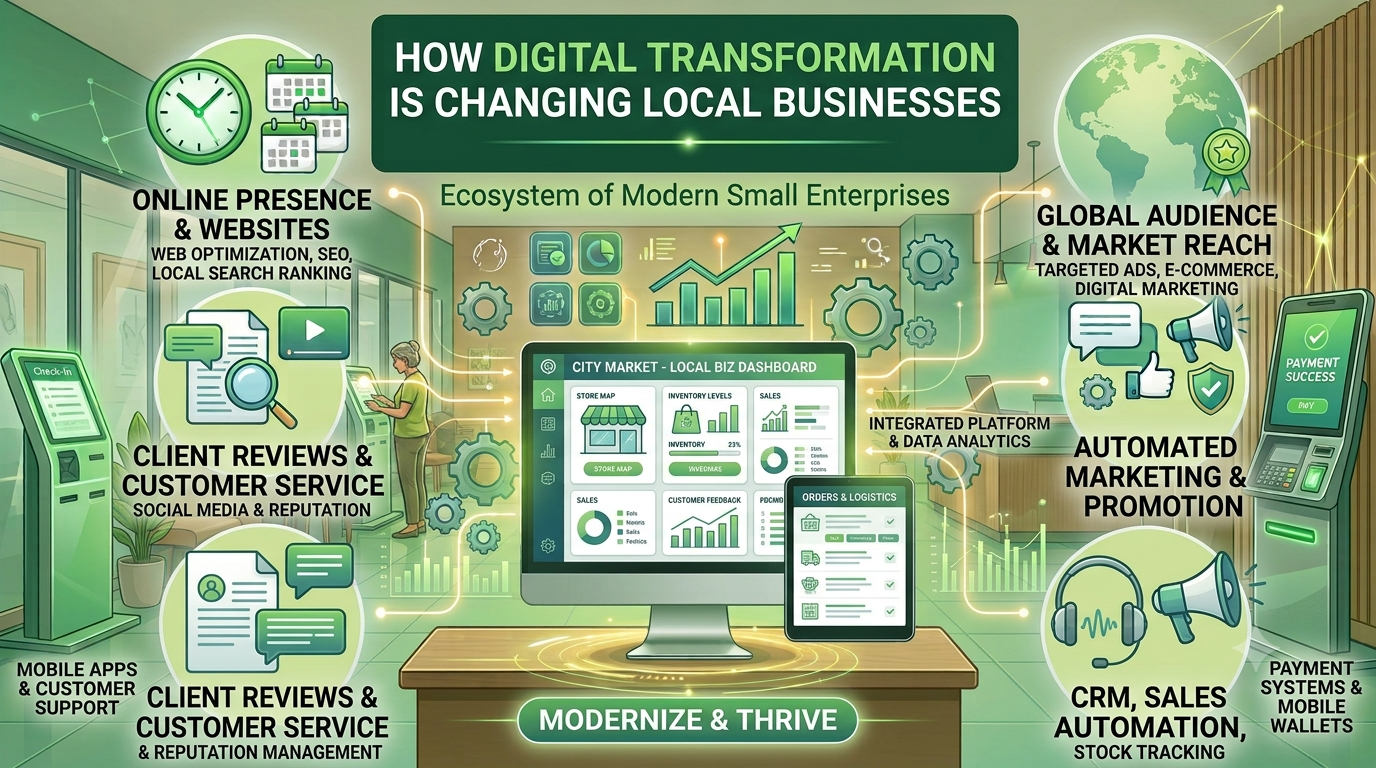
Digital transformation is fundamentally reshaping the way modern businesses operate across every industry, including healthcare, audiology clinics, retail, and service-based organizations. In today’s fast-moving digital era, traditional manual processes are no longer sufficient to meet customer expectations or maintain operational efficiency. Businesses are increasingly adopting websites, cloud-based software systems, mobile applications, and integrated management platforms to streamline their workflows and stay competitive in an evolving market. This shift is not just about using new technology—it represents a complete change in how organizations deliver services, manage data, and interact with their customers. For audiology clinics and healthcare providers, digital transformation means replacing paper records with electronic patient management systems, automating appointment scheduling, digitizing hearing test reports, and using centralized platforms like AudioSoft to manage all clinical operations in one place. These systems help reduce human error, eliminate redundant tasks, and improve communication between different departments such as front desk, consultation, testing labs, and billing units. Similarly, in retail and other service industries, businesses are adopting e-commerce platforms, CRM systems, and digital marketing tools to improve customer engagement and increase sales. One of the biggest advantages of digital transformation is the ability to reach more customers through online visibility. Websites, search engine optimization (SEO), and digital marketing campaigns allow businesses to appear in search results when potential clients are actively looking for their services. This significantly expands market reach beyond physical limitations and helps businesses attract a wider audience. At the same time, automation tools and integrated software systems reduce manual workload, improve accuracy, and allow staff to focus more on customer service rather than administrative tasks. Businesses that embrace digital transformation consistently perform better than those relying on outdated traditional methods. They operate more efficiently, respond faster to customer needs, and make data-driven decisions using real-time analytics and reporting tools. This leads to improved productivity, higher customer satisfaction, and stronger brand reputation. In contrast, companies that resist digital change often struggle with inefficiencies, higher operational costs, and reduced competitiveness. In today’s digital economy, adopting modern technology is no longer optional—it is essential for sustainable growth, innovation, and long-term business success.