Manual Patient Records vs Audiology Software – A Complete Comparison
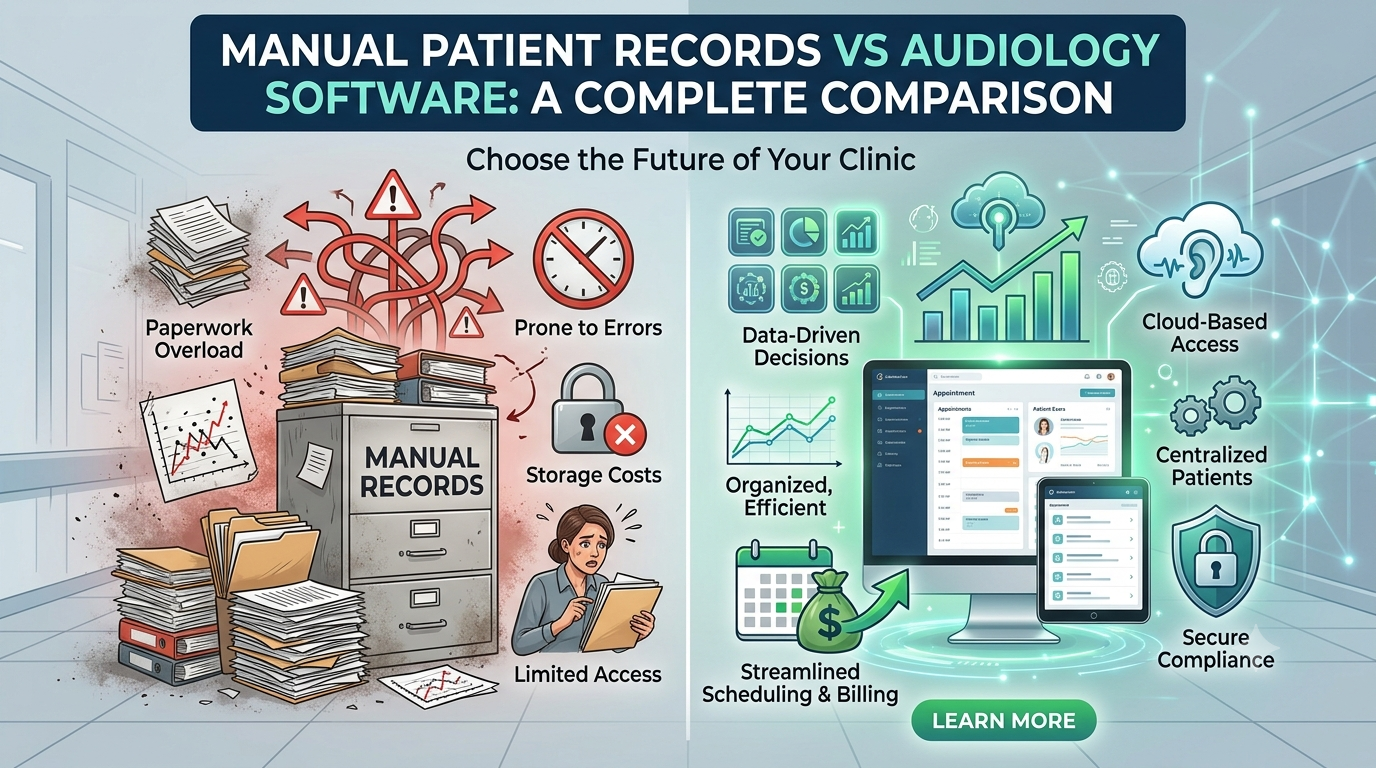
Manual record-keeping may have been sufficient in the past, but it is no longer practical for modern audiology clinics that handle a growing number of patients every day. Paper files are vulnerable to being misplaced, damaged, or lost, while manually updating records increases the likelihood of human error. Finding a patient's medical history, previous hearing assessments, prescriptions, or billing information can take several minutes, leading to longer waiting times and reduced staff productivity. As clinics expand, managing appointments, reports, inventory, and patient records manually becomes increasingly complex, making it difficult to maintain an efficient workflow and consistently deliver high-quality patient care. An audiology management system like AudioSoft eliminates these challenges by securely storing all patient information in one centralized digital platform. Healthcare professionals can instantly access complete patient histories, audiograms, hearing test results, consultation notes, hearing aid records, invoices, and follow-up appointments with just a few clicks. This not only saves valuable time but also ensures that every member of the clinic has access to accurate and up-to-date information whenever it is needed. Automated processes reduce administrative workload, minimize data entry errors, and help staff focus more on delivering exceptional care rather than managing paperwork. In addition to improving day-to-day operations, AudioSoft enhances the overall performance of the clinic by streamlining appointment scheduling, simplifying billing, generating professional reports, tracking inventory, and providing valuable business insights through real-time analytics. The software also protects sensitive patient information with advanced security features, role-based access controls, and reliable data backup options. By replacing outdated manual processes with a modern digital solution, audiology clinics can improve efficiency, increase accuracy, deliver a better patient experience, and position themselves for long-term growth in an increasingly technology-driven healthcare environment.