Why Every Business Needs a Website in 2026
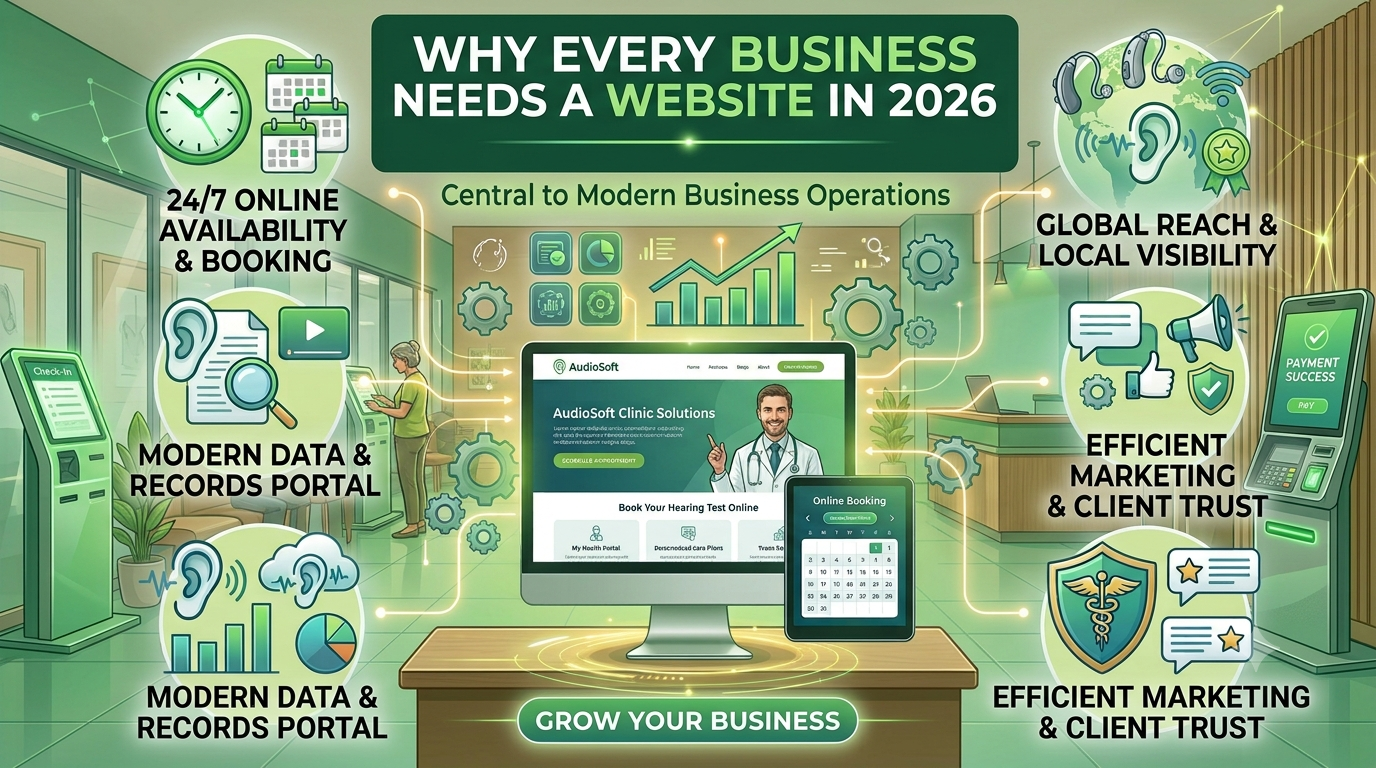
In today’s digital-first economy, a professional website is no longer just an optional asset for a business—it is the core foundation of its online presence and long-term growth. Customers now rely heavily on search engines and online platforms to discover services, compare businesses, and make purchasing decisions. A well-designed website acts as a central hub where potential customers can learn about your company, explore your services, understand your value proposition, and connect with you instantly. It creates the first impression of your brand, and in many cases, it determines whether a visitor becomes a paying customer or leaves for a competitor. Without a website, a business often appears less trustworthy, outdated, or even invisible in today’s competitive market. Customers may assume that a company without an online presence is not fully established or professional, which directly impacts credibility and brand reputation. A website not only builds trust but also establishes authority in your industry by showcasing your expertise, portfolio, testimonials, and achievements in a structured and accessible format. It serves as a digital identity that represents your business 24/7, regardless of location or time zone. Beyond credibility, a website plays a crucial role in marketing and customer acquisition. When properly optimized for search engines (SEO), it helps your business rank on Google and other search platforms, allowing potential customers to find your services organically. This increases visibility, drives consistent traffic, and reduces dependency on paid advertising alone. Features like contact forms, live chat, online booking, and service inquiries make it easier for customers to engage with your business instantly, improving conversion rates and overall customer satisfaction. In addition, a modern website supports branding, scalability, and business growth by providing a platform where you can continuously update content, add new services, publish blogs, and engage with your audience. It becomes a powerful marketing tool that works continuously to attract leads, generate inquiries, and convert visitors into loyal customers. In today’s competitive digital landscape, having a professional website is not just about being online—it is about staying relevant, visible, and competitive in an ever-evolving market.